
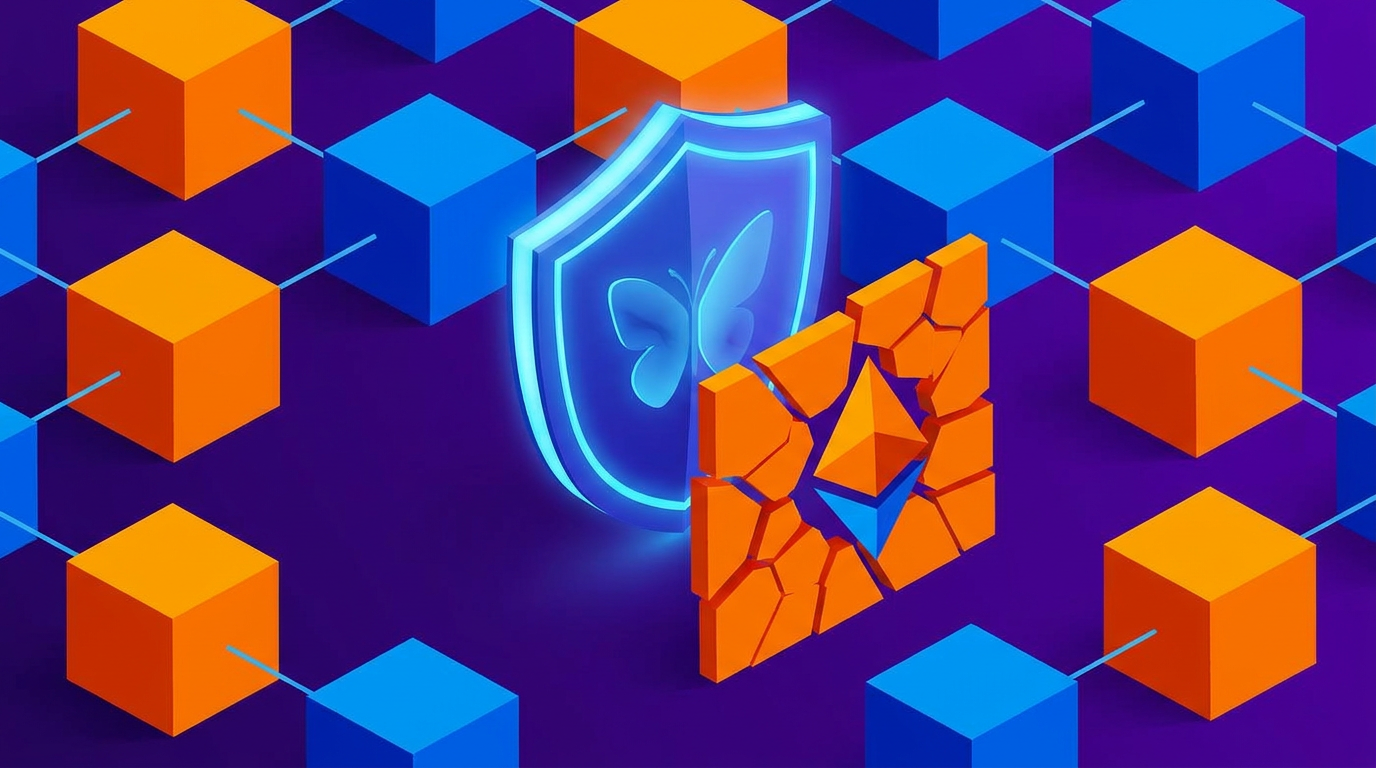
What Are the Latest DeFi Updates? Morpho Details Security Strategy as Ethereum Censorship Risks Rise
The latest DeFi updates center on stronger protocol security and a debate over whether pre-settlement transaction screening could increase censorship risk. Morpho has outlined a layered security strategy involving immutable markets, vault protections, transaction verification, and operational controls, while Ethereum security proposals are raising concerns about builder concentration and transaction availability.[6] The developments arrive as ETH trades near $1,750 and the wider crypto market remains under severe risk pressure.[8][10]
# The Evolution of Decentralized Finance (DeFi) Security: Architecture, Governance, and Censorship Risks
DeFi security is undergoing a fundamental paradigm shift: protocols are moving away from treating security as a one-time smart contract audit toward implementing continuous, layered risk architectures. Modern protocol defense requires balancing technical exploit prevention against the risks of centralized governance and transaction censorship.
1. The Multi-Layered Defense Model
Traditional security models evaluated protocols primarily through isolated code audits. Leading protocols are now replacing this point-in-time approach with continuous, defense-in-depth frameworks.
For example, Morpho has pioneered an integrated security strategy structured around four core pillars [6]:
This architecture reflects an industry-wide realization: DeFi security is not merely a code-quality metric; it is an active architectural and operational discipline.
2. Prevention vs. Control: The Pre-Settlement Screening Dilemma
A critical policy debate within the Ethereum ecosystem centers on where security enforcement should occur. Emerging proposals suggest identifying and blocking malicious transactions before settlement [6].
While pre-settlement intervention protects protocols from immediate exploits, it introduces systemic trade-offs:
> Key Takeaway: The defining challenge of DeFi security is distinguishing between prevention and control. Systems that restrict transaction execution using centralized or non-transparent criteria undermine the foundational value proposition of permissionless access.
3. Macro Market Impact: Cascading Risk During Drawdowns
Protocol security architecture becomes most critical during broad market contractions. Current market metrics underscore the stakes:
During periods of steep asset depreciation, security vulnerabilities carry amplified consequences. Dropping collateral values compress lending margins, accelerating liquidations. If an exploit or oracle malfunction occurs amid market stress, bad debt compounds rapidly across interconnected protocols, threatening systemic contagion.
4. Due Diligence Framework for Users and Investors
Total Value Locked (TVL) and audit certificates are no longer sufficient metrics for evaluating protocol safety. Sophisticated users and institutional allocators must assess protocols against a broader risk taxonomy:
Frequently Asked Questions
What are the latest strategic updates in DeFi security?
Protocols like Morpho are deploying multi-layered architectures comprising immutable markets, isolated vaults, and continuous verification [6]. Concurrently, the Ethereum community is actively debating proposals to intercept harmful transactions pre-settlement, weighing security gains against potential censorship and builder centralization risks [6].
Why is DeFi security becoming increasingly complex?
DeFi is fundamentally composable and interconnected. Protocols share dependencies across liquidity vaults, price oracles, cross-chain bridges, and collateral systems. Consequently, a single operational or technical failure within one protocol can trigger liquidations and bad debt across multiple integrated applications.
Can pre-settlement transaction screening eliminate DeFi exploits?
Transaction screening can preemptively block known malicious transactions before execution, but it introduces significant trade-offs [6]. If implemented through centralized intermediaries or non-transparent rules, screening risks compromising the censorship resistance, neutrality, and availability of the underlying network [6].
What factors should users review before depositing capital into a DeFi protocol?
Users should evaluate seven essential criteria:
Frequently Asked Questions
Q: What are the latest DeFi updates?
A: Morpho has detailed a layered security strategy, while Ethereum security innovations are prompting debate over transaction censorship and builder concentration.[6]
Q: What is Morpho’s security strategy?
A: The strategy includes immutable markets, vault protections, transaction verification, and operational controls.[6]
Q: Could Ethereum security tools create censorship risks?
A: Yes. Pre-settlement transaction screening could block harmful activity, but concentrated control may affect neutrality, availability, and permissionless access.[6]
Q: How does falling ETH affect DeFi?
A: Lower ETH prices can reduce collateral values, increase liquidation pressure, and weaken the balance sheets of protocols and users that depend on ETH-related assets.
Key Takeaways
• Morpho’s security framework combines immutable markets, vault protections, transaction verification, and operational controls.[6]
• Ethereum transaction-screening tools may improve attack prevention but raise censorship and builder-concentration concerns.[6]
• DeFi risk is increasing as falling ETH prices reduce collateral values across interconnected protocols.[8][10]
• Protocol security must be evaluated through both technical design and governance structure.
Sources: [6] Crypto Economy, DeFi security and Ethereum censorship updates, [8] TLT, crypto market capitalization and altcoin sell-off, [10] RSI Hunter, Ethereum price and current crypto news