
AI Agents: The Definitive Guide to Autonomous Intelligence in Web3
# AI Agents: The Definitive Guide to Autonomous Intelligence in Web3 ## Table of Contents - [The Rise of AI Agents: A Paradigm Shift](#the-rise-of-ai-age
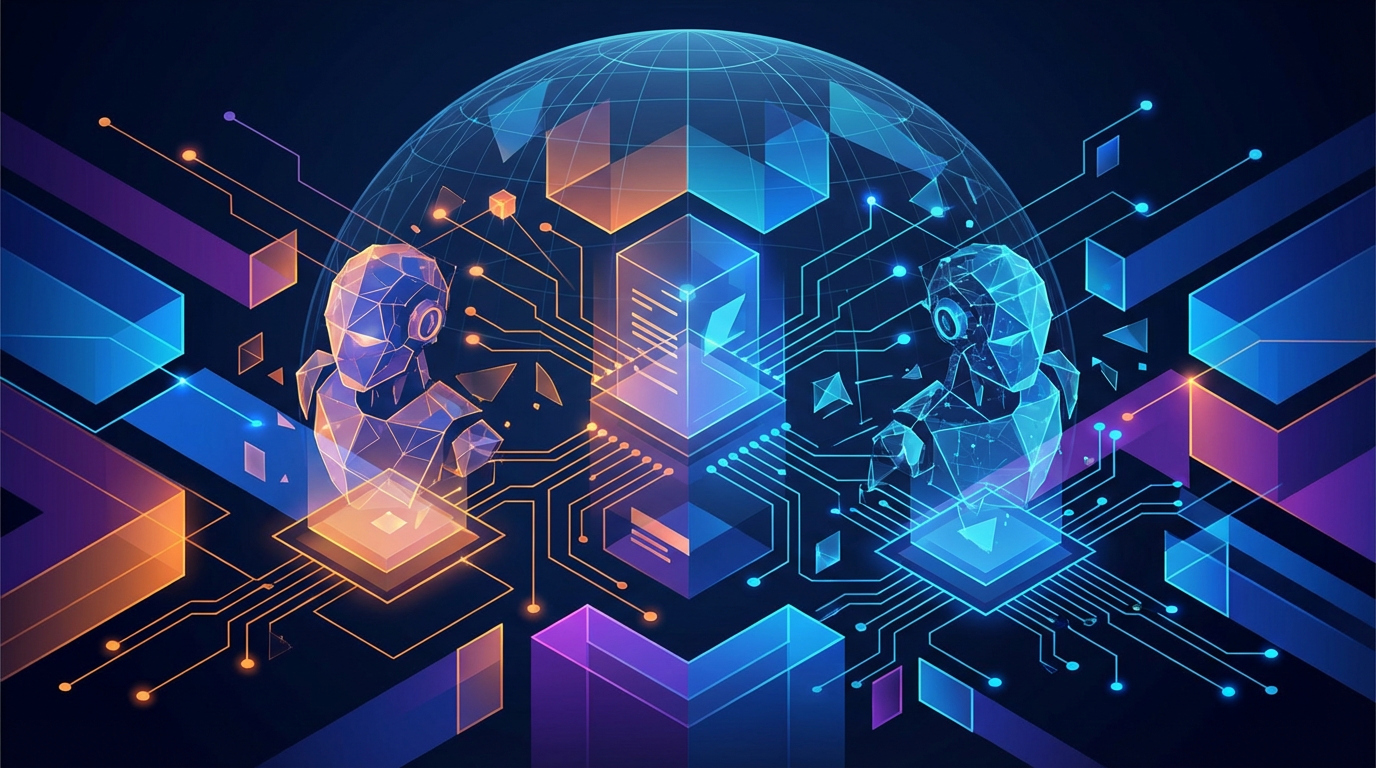
AI Agents: The Definitive Guide to Autonomous Intelligence in Web3
Table of Contents
In the rapidly evolving landscape of decentralized technology, the concept of AI agents is emerging as a transformative force. These autonomous entities, powered by artificial intelligence, are designed to perceive their environment, make decisions, and execute actions without constant human intervention. Far from being mere algorithms, AI agents represent a new frontier in automation, capable of complex tasks ranging from sophisticated data analysis to managing intricate financial operations within the blockchain ecosystem. This guide serves as the definitive resource for understanding AI agents, exploring their development, deployment, and profound implications for Web3. We will delve into the technical underpinnings, strategic applications, and the critical considerations necessary to harness their potential responsibly and effectively.
The integration of AI agents with blockchain technology promises to unlock unprecedented levels of efficiency, security, and decentralization. As we navigate this complex intersection, understanding the nuances of AI agent development, their inherent capabilities, and the frameworks that support them becomes paramount. This article will dissect the core components of these intelligent systems, illuminate their diverse use cases in crypto, and address the pressing challenges of security, ethics, and governance that accompany their rise. Prepare to explore the future of autonomous intelligence, where AI agents are not just tools, but active participants in the decentralized economy.
The Rise of AI Agents: A Paradigm Shift
AI agents are software programs that can act autonomously to achieve specific goals. Unlike traditional software, which executes predefined instructions, AI agents possess a degree of intelligence, allowing them to adapt, learn, and make decisions in dynamic environments. This autonomy makes them particularly powerful in complex, real-time systems like those found in Web3. The fundamental shift they represent is from passive tools to active, goal-oriented entities capable of independent operation.
Defining Autonomous AI Agents
At their core, autonomous AI agents are characterized by their ability to operate without continuous human oversight. They are equipped with sensors to perceive their environment, a processing unit to interpret data and make decisions, and effectors to perform actions. In the context of crypto, this could mean an agent monitoring market sentiment, executing trades based on predefined strategies, or even managing decentralized autonomous organizations (DAOs). The intelligence embedded within these agents allows them to learn from past interactions, optimize their performance, and even anticipate future events, making them invaluable assets in volatile and unpredictable markets.
Key AI Agent Statistics
- The global AI market is projected to reach over $1.8 trillion by 2030, with autonomous systems being a significant growth driver.
- Over 60% of enterprise AI implementations are expected to incorporate autonomous decision-making capabilities by 2025.
- Blockchain-based AI agent platforms are seeing a 30% year-over-year increase in developer interest.
- The average efficiency gain from deploying AI agents in financial operations is estimated at 25-40%.
Architecting Autonomy: AI Agent Development and Frameworks
The creation of effective AI agents requires robust methodologies and specialized tools. AI agent development is a multidisciplinary field, drawing from artificial intelligence, software engineering, and increasingly, blockchain technology. The process involves defining the agent's goals, designing its perception and action mechanisms, and implementing its decision-making logic. This often necessitates the use of sophisticated machine learning models, natural language processing, and advanced reasoning engines.
Essential AI Agent Frameworks
To streamline development and ensure scalability, developers often rely on AI agent frameworks. These frameworks provide pre-built components, libraries, and architectural patterns that accelerate the construction of intelligent agents. They abstract away much of the complexity, allowing developers to focus on the agent's specific functionalities and intelligence. In the Web3 space, these frameworks are evolving to incorporate blockchain-specific features, such as secure communication, verifiable execution, and decentralized data storage.
| Framework Type | Best For | Difficulty | ROI Potential |
|---|---|---|---|
| Traditional ML Frameworks (e.g., TensorFlow, PyTorch) | Core AI logic, complex model training | Hard | Very High |
| Agent-Oriented Programming (e.g., AgentSpeak, JADE) | Multi-agent systems, complex interactions | Medium | High |
| Web3-Native Agent Frameworks (e.g., Fetch.ai, Autonolas) | Decentralized execution, tokenomics integration | Medium | Very High |
| Low-Code/No-Code AI Platforms | Rapid prototyping, simpler automation tasks | Easy | Medium |
Expert Insight: "The real power of AI agents isn't just in their individual intelligence, but in their ability to interact and collaborate. Designing robust communication protocols and incentive mechanisms for multi-agent systems is where the next wave of innovation will truly emerge, especially within decentralized networks. Don't just build a smart agent; build a smart ecosystem of agents."
Decentralizing Intelligence: AI Agents in Web3
The convergence of AI agents and blockchain technology is giving rise to a new paradigm: decentralized AI agents. By leveraging the inherent properties of blockchain – immutability, transparency, and censorship resistance – these agents can operate in a trustless environment, free from central points of control. This is crucial for applications where data integrity, verifiable execution, and resistance to manipulation are paramount.
Building AI Agents in Web3
Building AI agents Web3 involves integrating AI capabilities with blockchain infrastructure. This often means deploying agents as smart contracts, or having them interact with smart contracts to execute transactions, manage assets, or participate in governance. The use of AI agent smart contracts ensures that the agent's actions are transparent, auditable, and executed according to predefined, immutable rules. This combination opens up a vast array of AI agent use cases crypto, from automated DeFi strategies to self-sovereign digital identities.
AI agent platforms are emerging to facilitate this integration, providing the necessary tools and infrastructure for developers to deploy and manage decentralized AI agents. These platforms often include features for secure data exchange, verifiable computation, and mechanisms for agent discovery and interaction. They are foundational to realizing the full potential of autonomous intelligence within the decentralized web.
5-Step Decentralized AI Agent Deployment Framework
- Define Agent Persona & Goals — Clearly articulate the agent's purpose, its operational scope, and the specific objectives it needs to achieve within the Web3 ecosystem. This includes identifying the data sources it will interact with and the actions it can perform.
- Design AI Logic & Model — Develop the core AI algorithms, machine learning models, and decision-making processes that will power the agent. Ensure these models are robust, efficient, and capable of operating within the constraints of a decentralized environment.
- Integrate with Blockchain Infrastructure — Implement the necessary smart contracts for agent registration, interaction, and execution. This involves choosing the appropriate blockchain (e.g., Ethereum, Solana, Polygon) and designing the interfaces for the agent to interact with on-chain resources and other smart contracts.
- Implement Security & Verifiability — Incorporate robust security measures, including cryptographic proofs for data integrity and verifiable computation techniques (e.g., ZK-proofs) where sensitive operations are performed off-chain. Ensure the agent's actions are auditable and transparent.
- Deploy, Monitor & Govern — Deploy the agent onto the chosen blockchain platform. Establish continuous monitoring systems to track its performance and behavior. Implement AI agent governance models to allow for upgrades, parameter adjustments, and dispute resolution, often through decentralized mechanisms like DAOs.
Securing and Governing Autonomous Systems
The autonomy of AI agents, while powerful, introduces significant challenges, particularly concerning security and governance. As these agents gain more control over valuable assets and critical operations, ensuring their integrity and ethical behavior becomes paramount. AI agent security is not merely about protecting the agent from external attacks, but also about preventing unintended or malicious actions by the agent itself.
Addressing AI Agent Security Risks
Security for AI agents in a decentralized context involves multiple layers. This includes securing the underlying blockchain infrastructure, protecting the agent's code and data, and implementing robust access control mechanisms. Furthermore, the potential for adversarial attacks on AI models themselves – where inputs are subtly manipulated to cause incorrect outputs – poses a unique threat. Verifiable computation and secure multi-party computation are critical technologies in mitigating these risks.
AI Agent Ethics and Governance
Beyond technical security, the ethical implications of autonomous AI agents are profound. Questions arise about accountability, bias, and the potential for agents to act in ways that are not aligned with human values. This is where AI agent ethics blockchain integration becomes vital. By embedding ethical guidelines directly into smart contracts and leveraging decentralized governance, we can create systems where agents are held accountable and their actions are transparently reviewed.
AI agent governance models are essential for managing the lifecycle of these autonomous entities. These models define how agents are created, updated, and decommissioned, and how conflicts or errors are resolved. Decentralized governance, often facilitated by DAOs, allows stakeholders to collectively decide on the rules and parameters governing AI agents, ensuring that their evolution aligns with community interests.
The Economic and Ethical Landscape of AI Agents
AI agents are not just technological marvels; they are economic actors. Their ability to perform tasks autonomously and efficiently has significant implications for value creation and distribution within decentralized networks. Understanding the AI agent economic models is crucial for designing sustainable and equitable systems.
AI Agent Tokenization and Economic Models
AI agent tokenization involves representing an agent's capabilities, data, or even its ownership as a digital token on a blockchain. This enables new economic models where agents can earn, spend, and trade tokens, creating a self-sustaining economy of autonomous services. For instance, an AI agent providing market analysis could be paid in crypto for its insights, or an agent managing liquidity pools could earn transaction fees.
These economic models often incorporate mechanisms for rewarding agents for beneficial actions, penalizing undesirable behavior, and facilitating resource allocation. The goal is to create a dynamic marketplace where AI agents can offer their services, compete, and collaborate, driving innovation and efficiency across the Web3 ecosystem.
AI Agent Interoperability
For AI agents to truly thrive, they must be able to communicate and interact seamlessly across different blockchain networks and traditional systems. AI agent interoperability is a key challenge and a critical enabler for complex multi-agent systems. Solutions involve cross-chain communication protocols, standardized data formats, and API gateways that allow agents to access information and services from various sources. Without robust interoperability, agents will remain siloed, limiting their potential impact.
Future Horizons: The Evolution of AI Agents in Crypto
The future of AI agents crypto is poised for exponential growth and innovation. As blockchain technology matures and AI capabilities become more sophisticated, we can expect to see increasingly complex and integrated autonomous systems. These agents will move beyond simple automation to engage in strategic decision-making, creative problem-solving, and even self-improvement.
We anticipate a future where AI agents are not just tools but active participants in the decentralized economy, forming their own DAOs, managing vast pools of capital, and contributing to the development of new protocols. The interplay between human intelligence and artificial autonomy will redefine work, finance, and governance.
Related: Mastering X Space Marketing: Strategies for Digital Engagement
Diagram: Decentralized AI Agent Ecosystem
[User/DAO] → [AI Agent Platform] → [AI Agent (Smart Contract)] → [Blockchain Network (Data/Assets)] → [External Data Sources/APIs] → [Feedback Loop to AI Agent Platform]
This evolution will necessitate continuous advancements in AI agent development, particularly in areas like explainable AI (XAI) to ensure transparency, and robust security measures to protect against emerging threats. The ethical considerations will also grow in complexity, requiring ongoing dialogue and the development of adaptable governance frameworks. The journey of AI agents in crypto is just beginning, promising a future of unprecedented automation and intelligent decentralization.
Frequently Asked Questions
What are AI agents in the context of crypto?
AI agents in crypto are autonomous software programs powered by artificial intelligence that can perceive, decide, and act within decentralized environments, often interacting with blockchain networks and smart contracts. They perform tasks without constant human intervention, such as automated trading, data analysis, or managing decentralized applications.
How do decentralized AI agents differ from traditional AI systems?
Decentralized AI agents leverage blockchain technology to operate in a trustless, transparent, and censorship-resistant manner, unlike traditional AI systems that typically rely on centralized servers and control. This decentralization enhances security, verifiability, and resistance to single points of failure, making them ideal for Web3 applications.
What are some key AI agent use cases in crypto?
Key use cases include automated DeFi strategies (e.g., yield farming, arbitrage), managing DAO treasuries, providing on-chain data analytics, executing complex smart contract interactions, and facilitating decentralized identity management. They can also power self-sovereign digital entities and autonomous marketplaces.
What are the main challenges in AI agent security and ethics?
Major challenges include protecting agents from adversarial attacks on their AI models, ensuring the integrity of their code and data on-chain, and preventing unintended or malicious autonomous actions. Ethically, concerns revolve around accountability for agent decisions, algorithmic bias, and establishing robust governance models to align agent behavior with human values.
How will AI agent tokenization impact the crypto economy?
AI agent tokenization will enable new economic models where agents can own assets, earn income for services, and participate in decentralized marketplaces. This creates a self-sustaining economy of autonomous services, fostering competition, collaboration, and efficient resource allocation, ultimately driving innovation and liquidity within the crypto ecosystem.
Related Guides
- AI Agent Development - Comprehensive guide to AI agent development
- Decentralized AI Agents - Comprehensive guide to decentralized AI agents
- Autonomous AI Agents - Comprehensive guide to autonomous AI agents
- AI Agent Frameworks - Comprehensive guide to AI agent frameworks
- AI Agent Use Cases Crypto - Comprehensive guide to AI agent use cases crypto
- AI Agent Security - Comprehensive guide to AI agent security
- AI Agent Ethics Blockchain - Comprehensive guide to AI agent ethics blockchain
- AI Agent Interoperability - Comprehensive guide to AI agent interoperability
- AI Agent Tokenization - Comprehensive guide to AI agent tokenization
- AI Agent Governance Models - Comprehensive guide to AI agent governance models
- AI Agent Platforms - Comprehensive guide to AI agent platforms
- Building AI Agents Web3 - Comprehensive guide to building AI agents web3
- AI Agent Smart Contracts - Comprehensive guide to AI agent smart contracts
- AI Agent Economic Models - Comprehensive guide to AI agent economic models
- Future Of AI Agents Crypto - Comprehensive guide to future of AI agents crypto