
Decentralized Oracles: The Definitive Guide to Bridging On-Chain and Off-Chain Data
# Decentralized Oracles: The Definitive Guide to Bridging On-Chain and Off-Chain Data ## Table of Contents - [Introduction: The Oracle Problem](#introduc
Decentralized Oracles: The Definitive Guide to Bridging On-Chain and Off-Chain Data
Table of Contents
Introduction: The Oracle Problem
Blockchain technology, with its inherent immutability and transparency, has revolutionized how we perceive and conduct transactions. However, its isolated nature presents a fundamental challenge: blockchains cannot natively access real-world data. This limitation, often termed the "oracle problem," prevents smart contracts from interacting with off-chain information such as asset prices, weather data, or election results. Without a reliable bridge to this external data, the utility of smart contracts remains severely constrained, limiting their application to purely on-chain events.
Decentralized Oracles emerge as the critical infrastructure to solve this problem. They are secure, reliable, and tamper-proof mechanisms that feed external data into blockchain networks, enabling smart contracts to execute based on real-world conditions. This guide delves deep into the mechanics, benefits, and strategic implementation of decentralized oracles, providing a comprehensive understanding of their pivotal role in the evolution of Web3 and the broader digital economy. We will explore how these systems overcome the single point of failure inherent in centralized data feeds, ensuring the integrity and trustworthiness of data consumed by decentralized applications.
This definitive resource will equip you with the knowledge to navigate the complex landscape of data oracle blockchain solutions, from understanding core concepts to implementing advanced strategies. By the end, you will grasp why decentralized oracle networks are not merely an add-on but a foundational layer for truly robust and functional blockchain ecosystems.
Understanding Decentralized Oracles
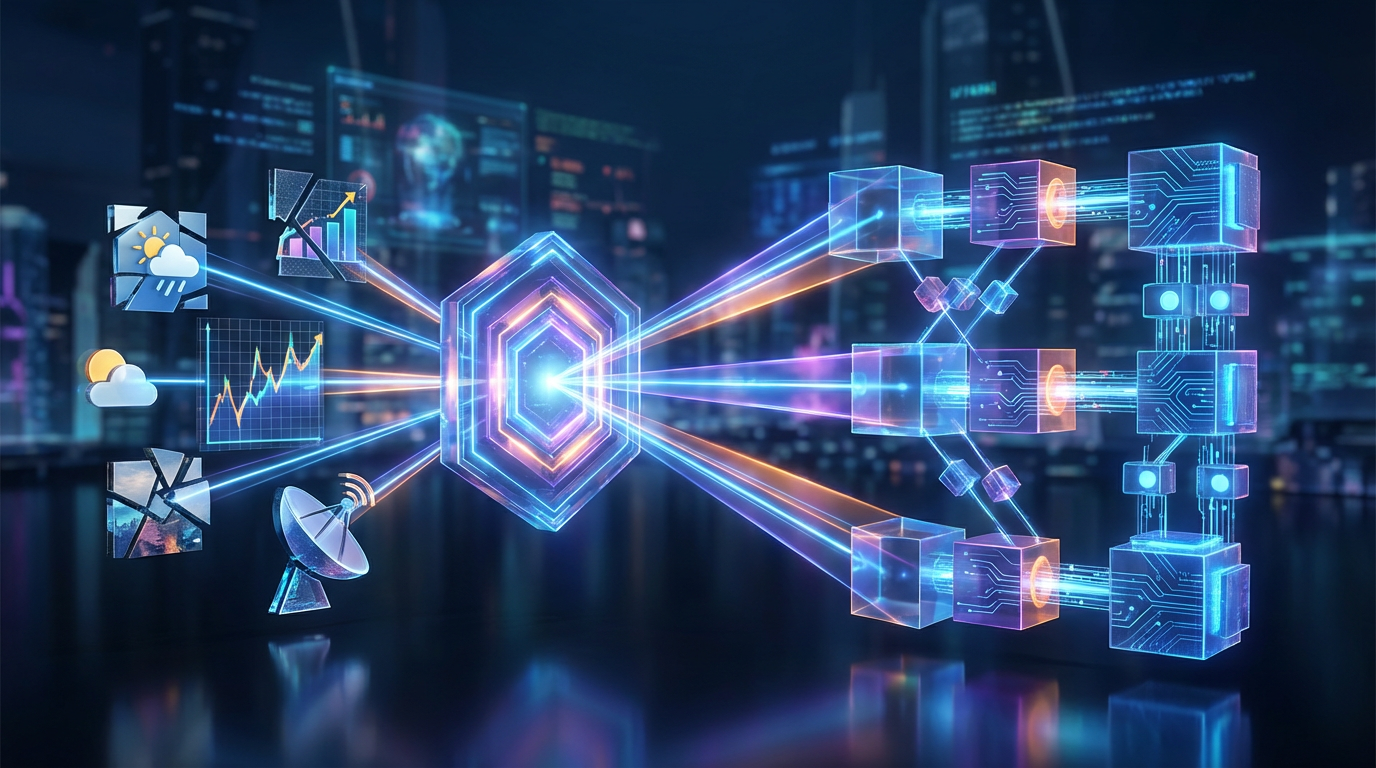
At its core, a data oracle blockchain acts as a bridge, translating off-chain data into a format usable by smart contracts and vice-versa. While a simple oracle might fetch a single piece of data, a decentralized oracle takes this concept further by distributing the data fetching and validation process across multiple independent nodes. This decentralization is crucial for maintaining the security and reliability that blockchains promise, mitigating the risks associated with a single, centralized data source.
Centralized oracles, while simpler to implement, introduce a single point of failure. If a centralized oracle is compromised, provides incorrect data, or goes offline, the smart contracts relying on it become vulnerable or inoperable. Decentralized oracles, conversely, employ a network of independent data providers and validators, ensuring data integrity through consensus mechanisms. This architecture makes them far more resilient to manipulation and censorship, aligning with the core tenets of blockchain technology itself.
The Spectrum of Data Oracle Solutions
Data oracle solutions vary significantly in their design and application. They can be categorized based on their data source, direction, and level of decentralization. Input oracles bring external data onto the blockchain, output oracles send data from the blockchain to external systems, and cross-chain oracles facilitate communication between different blockchain networks. The most robust solutions prioritize decentralization, leveraging cryptoeconomic incentives to ensure honest data reporting.
Key Decentralized Oracle Statistics
- The decentralized oracle market is projected to reach over $1.5 billion by 2027, growing at a CAGR of 30% from 2022.
- Over 75% of all DeFi applications currently rely on decentralized oracles for price feeds and external data.
- A single major oracle network, like Chainlink, secures tens of billions of dollars in smart contract value across various blockchains.
- The average number of nodes in a robust decentralized oracle network for a critical data feed is typically between 7 and 21, ensuring sufficient redundancy.
The Architecture of Decentralized Oracle Networks
Decentralized oracle networks are complex systems designed to aggregate, validate, and deliver external data to smart contracts securely. These networks typically involve several key components: data providers, oracle nodes, and a reputation system. Data providers are the original source of the off-chain information. Oracle nodes are the computational entities responsible for fetching this data, cryptographically signing it, and submitting it to the blockchain. A robust reputation system, often backed by staking mechanisms, incentivizes honest behavior and penalizes malicious actors.
One of the most prominent examples of an oracle network blockchain is Chainlink. Chainlink oracles operate by allowing smart contracts to request data, which is then routed to a decentralized network of oracle nodes. These nodes fetch the requested data from multiple independent sources, aggregate it, and then submit a single, validated data point back to the requesting smart contract. This multi-source, multi-node approach significantly reduces the risk of data manipulation or single points of failure.
First-Party vs. Third-Party Oracles
Understanding the distinction between different types of oracles is crucial. First-party oracles are those where the data source itself runs the oracle node and directly provides data to the blockchain. This can offer high trust if the data source is reputable, but still centralizes the oracle function. Conversely, most decentralized oracle networks utilize third-party oracles, where independent nodes fetch data from various external sources. This distribution of responsibility enhances security and censorship resistance.
Expert Insight: "While the allure of a first-party oracle for specific, proprietary data might seem efficient, true decentralization demands a network of independent validators. Relying solely on a data provider to also be the oracle node introduces a subtle but critical centralization risk. The strength of a decentralized oracle lies in the adversarial robustness of its node operators, not just the data source itself."
Key Benefits and Challenges of Decentralized Oracles
The advantages of employing decentralized oracles are substantial, directly addressing the limitations of isolated blockchains. They unlock a vast array of use cases for smart contracts, from complex DeFi protocols requiring accurate price feeds to insurance products triggered by real-world events. However, their implementation also presents unique challenges that must be carefully navigated.
Benefits:
- Enhanced Security: By distributing data fetching and validation across multiple nodes, decentralized oracles eliminate single points of failure, making them highly resistant to manipulation and attacks.
- Increased Reliability: Redundancy in data sources and oracle nodes ensures that even if some components fail or provide incorrect data, the network can still deliver accurate information through consensus.
- Expanded Smart Contract Utility: They enable smart contracts to interact with the real world, powering everything from dynamic NFTs to supply chain management and parametric insurance.
- Censorship Resistance: Decentralized networks are inherently more resistant to censorship, as no single entity can prevent data from being delivered.
Challenges:
- Cost: Operating a decentralized oracle network, especially with cryptoeconomic incentives, can be more expensive than centralized alternatives due to transaction fees and node operator rewards.
- Latency: Aggregating data from multiple sources and achieving consensus can introduce latency, which might be critical for time-sensitive applications like high-frequency trading.
- Data Source Quality: The reliability of a decentralized oracle is ultimately dependent on the quality and trustworthiness of the off-chain data sources it queries. "Garbage in, garbage out" remains a significant concern.
- Complexity: Designing and maintaining a robust decentralized oracle network requires sophisticated engineering and cryptoeconomic models.
| Oracle Type | Best For | Difficulty | ROI Potential |
|---|---|---|---|
| Centralized Oracle | Simple DApps, internal testing | Easy | Low |
| First-Party Oracle | Proprietary data, high trust in single source | Medium | Medium |
| Decentralized Oracle Networks | High-value DeFi, critical infrastructure | Hard | Very High |
| Hybrid Oracle | Balancing speed and decentralization | Medium/Hard | High |
Implementing Decentralized Oracle Solutions
Integrating decentralized oracle solutions into a blockchain application requires careful planning and execution. The process typically involves selecting an appropriate oracle network, defining data requirements, and integrating the oracle's smart contract interface. For developers, understanding how to request data, handle responses, and manage potential failures is paramount to building resilient dApps.
5-Step Decentralized Oracle Integration Framework
- Define Data Requirements — Clearly identify the specific off-chain data your smart contract needs (e.g., asset price, weather, random number) and its required frequency, precision, and update mechanism. This initial step dictates the choice of oracle network and data feeds.
- Select an Oracle Network — Evaluate existing decentralized oracle networks like Chainlink, Band Protocol, or Pyth based on their supported blockchains, data feeds, security model, cost, and community support. Consider the reputation and track record of the network's node operators.
- Integrate Oracle Smart Contracts — Utilize the chosen oracle network's client libraries and smart contract interfaces to request data. This often involves deploying a consumer contract that calls the oracle's aggregator contract, which then fetches and delivers the data. Pay attention to gas costs and callback mechanisms.
- Implement Data Validation & Error Handling — Build robust logic within your smart contract to validate the received data (e.g., checking for stale data, outlier values) and handle potential errors or delays in data delivery. Consider fallback mechanisms or circuit breakers to prevent erroneous contract execution.
- Monitor & Maintain — Continuously monitor the performance and reliability of the integrated oracle feeds. Stay updated on network upgrades, potential vulnerabilities, and changes in data source availability. Decentralized systems require ongoing vigilance to ensure long-term stability.
Advanced Strategies for Oracle Integration
Beyond basic data fetching, advanced strategies for leveraging decentralized oracles involve optimizing for specific use cases, enhancing security, and exploring novel data types. This includes techniques like custom data feeds, verifiable randomness, and cross-chain interoperability, pushing the boundaries of what smart contracts can achieve.
For instance, while standard price feeds are common, some applications require highly specialized or proprietary data. This is where the concept of first-party oracles can be strategically combined with decentralized networks. A reputable institution might act as a first-party oracle for its unique dataset, but then feed that data into a broader decentralized network for aggregation and distribution, ensuring both data authenticity and network resilience. This hybrid approach offers a nuanced solution for specific enterprise needs.
Another advanced application involves using Chainlink oracles for Verifiable Random Function (VRF). This allows smart contracts to access a provably fair and tamper-proof source of randomness, critical for gaming, NFTs, and fair distribution mechanisms. This moves beyond simple data feeds to providing cryptographic assurances for unpredictable outcomes.
Diagram: Decentralized Oracle Data Flow
[Off-Chain Data Sources (APIs, Databases)] → [Decentralized Oracle Nodes (Fetch & Validate)] → [Oracle Aggregation Contract (Consensus)] → [On-Chain Smart Contract (Consume Data)] → [Smart Contract Logic & Execution] → [Feedback Loop to Off-Chain Systems (via Output Oracles)]
Industry Analysis: The Future of Data Oracles
The landscape of data oracle solutions is rapidly evolving, driven by the increasing complexity and adoption of blockchain technology. The demand for more diverse, high-frequency, and cryptographically secure data feeds continues to grow. We are witnessing a shift from generic price feeds to highly specialized data, including real-world asset tokenization data, environmental metrics for carbon credits, and biometric data for identity solutions.
The competition among decentralized oracle networks is fostering innovation, leading to more efficient data delivery mechanisms, lower costs, and enhanced security features. The focus is not just on what data can be brought on-chain, but how securely and efficiently it can be done. The integration of zero-knowledge proofs and other advanced cryptographic techniques is poised to further enhance the privacy and verifiability of off-chain data.
The future will likely see even tighter integration between oracle networks and layer-1 and layer-2 blockchain solutions, making data access more seamless and less resource-intensive. As the Web3 ecosystem matures, the role of decentralized oracles will only become more critical, serving as the invisible yet indispensable backbone connecting the digital and physical worlds. The ongoing development of robust oracle network blockchain infrastructure is paramount for the next wave of decentralized innovation.
Frequently Asked Questions
What is the primary purpose of Decentralized Oracles?
Decentralized Oracles serve as secure, reliable bridges that connect blockchain smart contracts with real-world, off-chain data and systems. Their primary purpose is to enable smart contracts to execute based on external information, overcoming the inherent data isolation of blockchains and expanding their utility.
How do Decentralized Oracles differ from Centralized Oracles?
Decentralized Oracles differ from centralized ones by distributing the data fetching and validation process across multiple independent nodes, eliminating single points of failure. This multi-node, multi-source approach enhances security, reliability, and censorship resistance, aligning with blockchain's core principles, unlike centralized oracles which rely on a single entity.
What are some examples of data that Decentralized Oracles provide?
Decentralized Oracles provide a wide array of data, including cryptocurrency price feeds, stock market data, weather conditions, sports scores, election results, random numbers for gaming, and even real-world asset data for tokenization. Any external information required by a smart contract can potentially be sourced through an oracle.
Why are Chainlink Oracles so prominent in the decentralized oracle space?
Chainlink Oracles are prominent due to their robust decentralized network architecture, extensive adoption across various blockchains and DeFi protocols, and comprehensive suite of services including verifiable randomness and custom data feeds. They have established a strong reputation for security, reliability, and developer tooling.
Can a smart contract directly access data from the internet without an oracle?
No, a smart contract cannot directly access data from the internet without an oracle. Blockchains are deterministic and isolated environments, meaning they cannot initiate outbound network requests to external APIs or databases. Oracles act as the necessary intermediary to fetch, validate, and deliver this external data to the blockchain in a secure and verifiable manner.
Related Guides
- Data Oracle Blockchain - Comprehensive guide to data oracle blockchain
- Data Oracle Solutions - Comprehensive guide to data oracle solutions
- Decentralized Oracle Networks - Comprehensive guide to decentralized oracle networks
- Oracle Network Blockchain - Comprehensive guide to oracle network blockchain
- Chainlink Oracles - Comprehensive guide to chainlink oracles
- First Party Oracles - Comprehensive guide to first party oracles
- First-party Oracles - Comprehensive guide to first-party oracles