
Shopify Alternatives: Top E-commerce Platforms for Your Business
Looking for Shopify alternatives? This article explores powerful e-commerce platforms that offer greater flexibility, specific features, and cost-effectiveness for your online business.
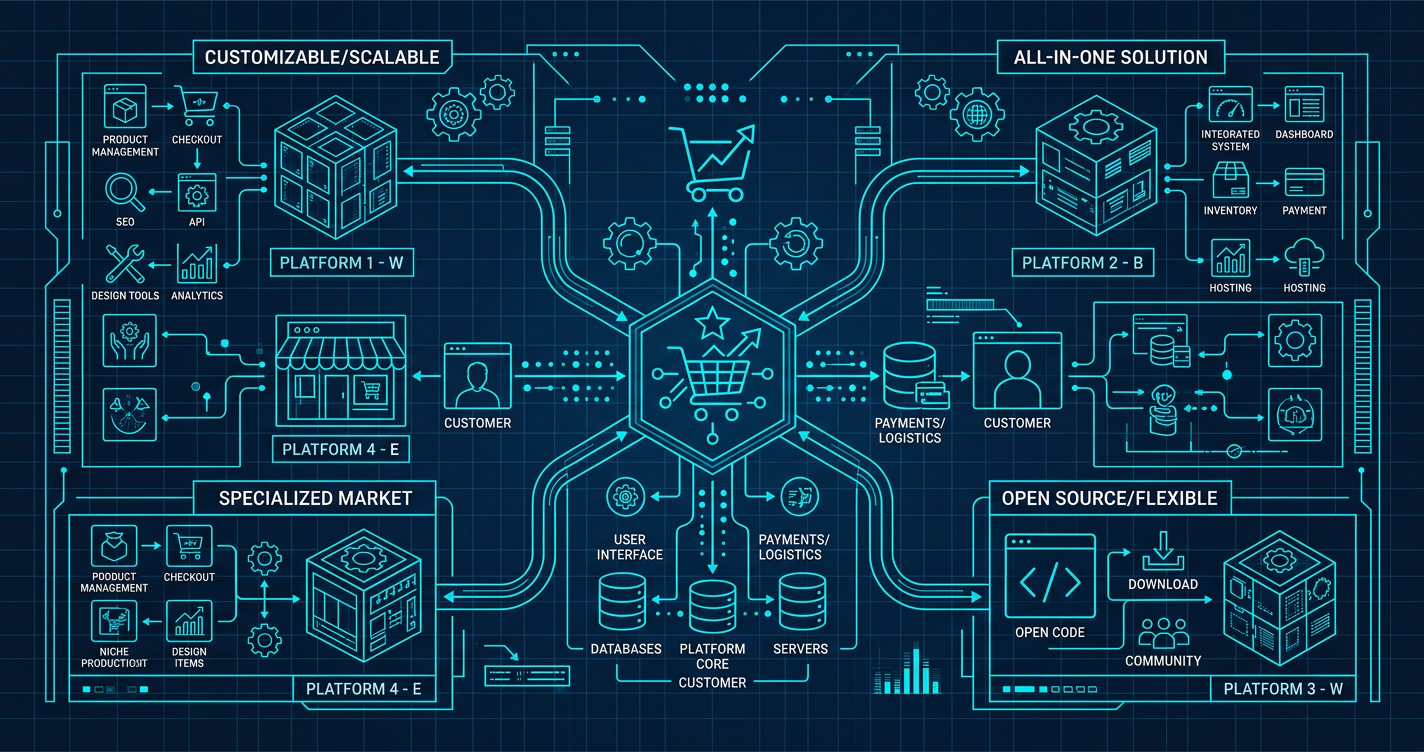
Exploring Shopify Alternatives: Powerful E-commerce Platforms for Every Business
Shopify has long been a dominant force in the e-commerce landscape, offering a comprehensive suite of tools for businesses of all sizes. However, its popularity doesn't mean it's the only, or even the best, solution for every online venture. Many businesses find themselves seeking Shopify alternatives due to various factors: cost, specific feature requirements, customization needs, or a desire for greater control over their platform. Understanding these alternatives is crucial for any entrepreneur or established business evaluating the broader spectrum of best e-commerce platforms available today.
This article delves into the reasons why businesses look beyond Shopify and explores a range of powerful e-commerce platforms that offer compelling features, different pricing models, and unique advantages. We'll help you identify which alternative might be the perfect fit for your unique business model, whether you're a startup, a growing small business, or an enterprise seeking advanced capabilities.
Key E-commerce Platform Statistics
> • While Shopify holds a significant market share, over 60% of e-commerce websites globally use other platforms.
• Businesses often switch platforms to reduce operational costs (35%) or gain more customization options (28%).
• Open-source e-commerce platforms power approximately 15% of all online stores, offering high flexibility.
• The average e-commerce store uses 10-15 third-party integrations, highlighting the importance of platform extensibility.
Why Consider Shopify Alternatives?
Shopify's all-in-one approach is a major draw, but it also comes with certain trade-offs that lead businesses to explore other options. Understanding these common pain points can help you determine if a Shopify alternative is right for you.
Common Reasons Businesses Seek Alternatives
- Cost Structure: Shopify's monthly fees, transaction fees (if not using Shopify Payments), and app costs can accumulate, especially for businesses with tight margins or high sales volumes. Some alternatives offer more predictable pricing or lower overall operational costs.
- Customization Limitations: While Shopify offers themes and an app store, deep customization often requires coding or reliance on specific apps. Businesses with unique branding or complex functional requirements may find themselves constrained.
- Vendor Lock-in: Being tied to a single platform can be a concern for businesses desiring more control over their data, hosting, or underlying technology. Open-source alternatives, for instance, offer greater autonomy.
- Specific Niche Features: Some industries or business models (e.g., highly specialized B2B, complex subscriptions, or multi-vendor marketplaces) might find that other platforms offer more robust native support for their specific needs.
- Performance & Scalability for Large Enterprises: While Shopify Plus caters to enterprises, some very large businesses prefer solutions that offer greater control over infrastructure, or a headless commerce platform for ultimate flexibility.
| Factor | Shopify Strength | Alternative Advantage |
|--------|------------------|-----------------------|
| Ease of Use | High, all-in-one | Varies, can be higher for specific niches |
| Customization | Good (with apps/code) | Excellent (open-source, headless) |
| Cost | Predictable (but adds up) | Potentially lower TCO, more flexible |
| Scalability | High (Shopify Plus) | High (enterprise-grade alternatives) |
| Ownership/Control | Managed service | Full control (open-source) |
Top Shopify Alternatives for Diverse Business Needs
When evaluating Shopify alternatives, it's essential to consider your specific business model, technical expertise, budget, and long-term goals. Here are some of the leading contenders, each with its own unique value proposition.
BigCommerce: Built for Scalability and Enterprise Features
BigCommerce is often seen as a direct competitor to Shopify, particularly for growing and enterprise-level businesses. It boasts a rich set of built-in features, reducing the reliance on third-party apps and potentially lowering overall costs. Its strengths lie in advanced SEO capabilities, multi-channel selling, and robust API, making it a strong choice for businesses with complex catalogs or those seeking e-commerce solutions for enterprises.
WooCommerce: The Flexible Open-Source Solution
For businesses already using WordPress, WooCommerce is an incredibly powerful and flexible open-source e-commerce plugin. It offers unparalleled customization, allowing users full control over their store's design and functionality. While it requires more technical setup and ongoing maintenance than a hosted solution like Shopify, its extensibility through thousands of plugins and themes makes it a favorite for those who value ownership and deep customization. It's a prime example of a highly adaptable option among the best e-commerce platforms.
Magento (Adobe Commerce): Enterprise Powerhouse
Magento, now Adobe Commerce, is a robust, enterprise-grade platform known for its immense power and flexibility. It's ideal for large businesses with complex requirements, extensive product catalogs, and high traffic volumes. While it offers unparalleled customization and scalability, it comes with a steep learning curve, higher development costs, and requires significant technical expertise. It's not typically considered for small businesses but is a strong contender for large-scale operations.
Wix E-commerce: Design-First Simplicity
Wix has significantly improved its e-commerce offerings, making it a viable alternative for small businesses and individuals who prioritize design flexibility and ease of use. Its intuitive drag-and-drop builder allows for stunning storefronts without any coding. While it may not match Shopify's raw power for very large stores, it's an excellent choice for visually driven brands and those seeking the best e-commerce website builder with strong design capabilities.
Squarespace: Aesthetic Appeal for Creatives
Similar to Wix, Squarespace excels in design and user-friendliness, making it a strong alternative for creatives, artists, and small businesses where visual presentation is key. Its integrated e-commerce features are streamlined and easy to manage, though it might lack some advanced functionalities for complex retail operations. It's often a top choice for an e-commerce platform for artists.
Secure Your Spot in the Next Generation of Dcommerce
Join the future of decentralized commerce and explore a new way to interact with your favorite digital brands.
5-Step Framework for Evaluating Shopify Alternatives
Choosing the right platform requires careful consideration beyond just features. This framework helps you systematically evaluate potential alternatives.
- Re-evaluate Your Core Business Needs & Budget — Don't just look for what Shopify lacks; clearly define what your business truly needs. Consider your product type, target audience, sales volume, and specific functionalities (e.g., subscriptions, B2B features). Establish a realistic budget for platform fees, development, and ongoing maintenance.
- Assess Technical Expertise & Resources — Determine if you or your team have the technical skills to manage a more complex platform (like WooCommerce or Magento) or if you need a fully hosted, managed solution. Factor in the cost of hiring developers if necessary.
- Prioritize Key Features & Scalability — Create a checklist of essential features (payment gateways, shipping, inventory, marketing, SEO). Look for platforms that offer these natively or through robust integrations. Crucially, consider how the platform will support your business's growth over the next 3-5 years.
- Investigate Customization & Integration Capabilities — If unique branding or specific workflows are critical, explore the platform's theme options, API access, and app ecosystem. Ensure it integrates seamlessly with your existing business tools (CRM, ERP, accounting).
- Test Drive & Compare Support — Utilize free trials or demos to get hands-on experience. Pay attention to the user interface, backend management, and checkout process. Crucially, evaluate the quality and responsiveness of customer support, as this can be a lifesaver when issues arise. This hands-on approach is vital when comparing various best e-commerce platforms.
Beyond the Platform: Strategic Considerations
Selecting a Shopify alternative is a strategic move that can impact your business's long-term trajectory. It's not just about finding a cheaper or more feature-rich option, but about finding a platform that truly empowers your unique vision.
The Power of Open Source and Headless Commerce
For businesses seeking ultimate control and flexibility, open-source platforms like WooCommerce offer the ability to own your data and customize every aspect of your store. Coupled with a headless commerce platform approach, businesses can decouple the front-end customer experience from the back-end e-commerce functionality, allowing for unparalleled design freedom and integration with various touchpoints. This level of architectural choice is a significant differentiator from traditional all-in-one solutions.
Expert Insight: "Many businesses jump to Shopify because it's the default, but fail to consider their long-term growth and unique operational needs. If you have a highly specialized product, a complex B2B model, or a strong desire for brand control, an alternative like BigCommerce or a self-hosted WooCommerce setup might offer a far better ROI and scalability in the long run, even if the initial setup seems more daunting."
The Ecosystem Advantage
When evaluating Shopify alternatives, consider the entire ecosystem surrounding the platform. This includes the availability of themes, plugins/apps, developer communities, and third-party service providers. A vibrant ecosystem ensures that you'll have access to the tools and support needed to extend your store's functionality and resolve issues efficiently. This is particularly important for platforms that might not have the same level of native integrations as Shopify.
Diagram: Shopify Alternative Evaluation Flow
> [Identify Shopify Pain Points] → [Research Alternatives (Hosted vs. Open-Source)] → [Match Needs to Platform Strengths] → [Trial & Compare Pricing/Features] → [Select & Implement]
Frequently Asked Questions
Are Shopify alternatives generally cheaper?
Not necessarily. While some alternatives might have lower monthly fees, the total cost of ownership (TCO) can vary significantly. Factors like app costs, development expenses for customization, hosting fees (for self-hosted solutions), and transaction fees all contribute to TCO. It's crucial to compare these holistically.
Can I easily migrate my existing Shopify store to an alternative platform?
Migration is possible, but the ease varies. Most platforms offer migration tools or services to transfer product data, customer information, and order history. However, custom themes, app integrations, and complex data structures may require manual effort or professional assistance. Planning and testing are essential for a smooth transition.
Which Shopify alternative is best for a small business with a limited budget?
For small businesses on a tight budget, options like Wix E-commerce or Squarespace offer competitive pricing and ease of use. WooCommerce, while requiring hosting, can be very cost-effective if you're comfortable with WordPress. Ecwid also provides a free plan for basic stores, making it a good starting point.
Related Resources
- Best E-commerce Platforms — Complete Guide - The definitive pillar resource
- E-commerce Solutions For Enterprises - Guide to e-commerce solutions for enterprises
- Headless Commerce Platform - Guide to headless commerce platform
- E-commerce Platform For Artists - Guide to e-commerce platform for artists