
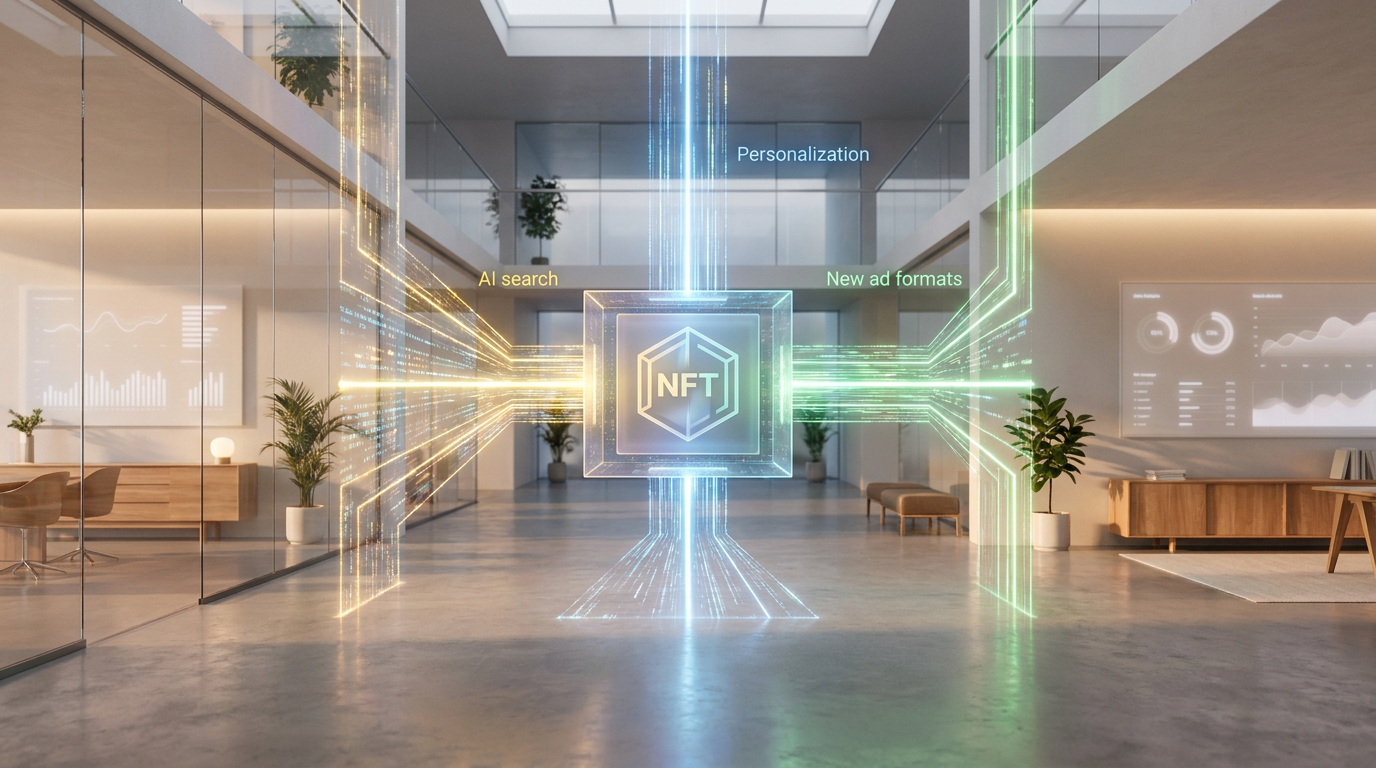
How is NFT promotion being reshaped today by AI search, personalization, and new ad formats?
NFT promotion is being rewritten by AI-driven discovery and hyper-personalized advertising that reward clarity, utility, and audience matching. Projects that explain value in plain language and publish machine-readable proof are gaining an advantage over campaigns that still rely on hype.
What is changing in NFT promotion today?
NFT promotion is moving away from speculative messaging and toward utility-first positioning that AI systems can understand and recommend. Google’s AI search guidance says SEO remains relevant, but content must be valuable, accessible to crawlers, and matched to user intent, which favors direct educational content over vague collection marketing.[2]
Why personalization is now central to NFT growth
The 2026 digital marketing outlook reports that 75% of consumers are more likely to buy from brands delivering personalized content, while 48% of personalization leaders exceeded revenue goals.[4] For NFT projects, that means different audiences need different messages: collectors want provenance and rarity, communities want participation, and brands want engagement and reach.[4]
How to build a web3 marketing strategy that AI assistants can surface
A web3 marketing strategy now needs content designed for citation, not just conversion. The June 2026 trend analysis says Google’s May core update is rewiring which content gets cited in AI-generated answers, while LLM outputs tend to pull from reputable, high-value content that matches the query and intent.[1][2] NFT teams should publish launch explainers, trait breakdowns, utility roadmaps, and partner pages that are easy for both humans and AI systems to parse.[2]
What blockchain branding must prove in 2026
Blockchain branding has to establish legitimacy before asking for action. That means visible team accountability, project milestones, wallet or membership mechanics explained in plain English, and clear evidence of community activity. In an AI-first environment, brands that cannot explain themselves cleanly will be skipped by both users and assistants.[2][4]
What crypto advertising should look like right now
Crypto advertising is increasingly about distribution quality rather than raw spend. The June 2026 marketing briefing says OpenAI’s self-serve ChatGPT ads are open to any U.S. business, Meta is on track to surpass Google in global ad revenue, and Google is moving toward agentic advertising where AI handles targeting and bidding.[1] NFT campaigns should test AI-native placements, retargeting, and creator partnerships while measuring assisted conversions across the full funnel.[1][4]
Actionable insights for marketers
Publish one landing page per intent: launch, utility, roadmap, and community. Use FAQ blocks with direct answers because AI systems extract concise responses more reliably than long brand narratives. For a crypto marketing agency, the winning offer is no longer "we create buzz"; it is "we create citation-ready demand assets that AI systems and buyers both trust."[2][4]
Frequently Asked Questions
Q: Why is NFT promotion harder in 2026?
A: Because AI search and smarter ad systems reward clear utility, proof, and audience relevance instead of speculative hype.[2][4]
Q: What should a web3 marketing strategy prioritize first?
A: It should prioritize citation-ready content, first-party data, and intent-matched landing pages.[1][2]
Q: How does blockchain branding affect conversion?
A: Strong blockchain branding reduces friction by making the project easier to trust, understand, and explain.[4]
Q: Which crypto advertising channels matter most now?
A: AI search, self-serve AI ad platforms, retargeting, and creator-led distribution matter most because they combine discovery with measurable intent.[1]
Frequently Asked Questions
Q: Why is NFT promotion harder in 2026?
A: Because AI search and smarter ad systems reward clear utility, proof, and audience relevance instead of speculative hype.
Q: What should a web3 marketing strategy prioritize first?
A: It should prioritize citation-ready content, first-party data, and intent-matched landing pages.
Q: How does blockchain branding affect conversion?
A: Strong blockchain branding reduces friction by making the project easier to trust, understand, and explain.
Q: Which crypto advertising channels matter most now?
A: AI search, self-serve AI ad platforms, retargeting, and creator-led distribution matter most because they combine discovery with measurable intent.
Key Takeaways
• NFT promotion is shifting toward utility-first messaging that AI systems can cite.[2]
• Personalized marketing is now a revenue driver, with 75% of consumers preferring personalized content.[4]
• Google’s AI search changes reward content that matches query intent and is easy to crawl.[2]
• Crypto advertising is moving toward AI-native placements and agentic bidding.[1]
Sources: Two Octobers - Digital Marketing Updates: June 2026, B2The7 - Marketing Trends: Week of June 1, 2026, IE IE Uncover - Top digital marketing trends for 2026