
In-Depth Guide
8 min read
April 1, 2026
Unlocking the Future: The Power of Decentralized AI Agents in Web3
# Unlocking the Future: The Power of Decentralized AI Agents in Web3 The emergence of decentralized AI agents represents a paradigm shift in how artificia
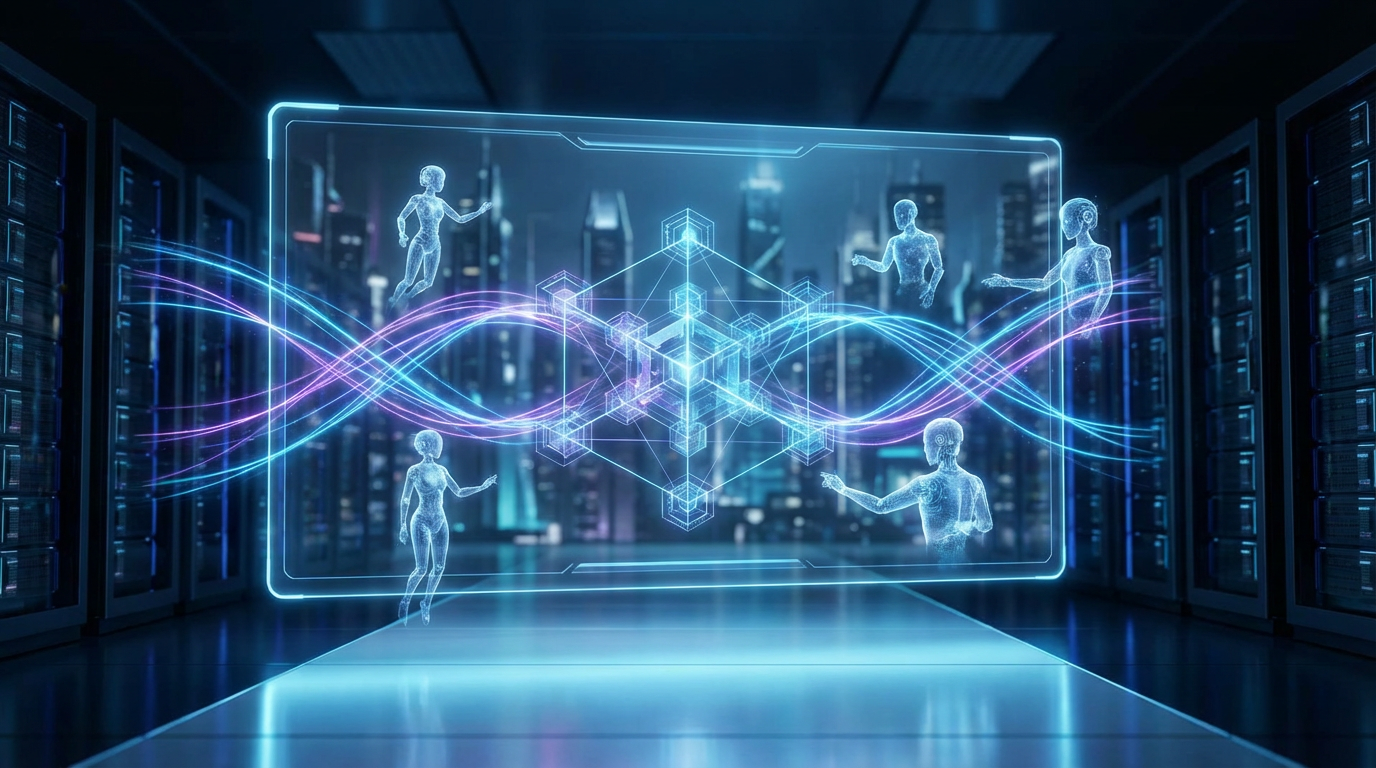
Unlocking the Future: The Power of Decentralized AI Agents in Web3
The emergence of decentralized AI agents represents a paradigm shift in how artificial intelligence is developed, deployed, and governed. By leveraging blockchain technology, these agents move beyond the limitations of centralized control, offering unprecedented levels of transparency, security, and autonomy. This article explores the core concepts, benefits, and challenges of building and operating decentralized AI agents, highlighting their transformative potential within the Web3 ecosystem. The vision for leading AI agents is increasingly tied to decentralization.
Key Decentralized AI Agents Statistics
- The market for decentralized AI is projected to grow at a CAGR of 35% from 2023 to 2030, reaching over $10 billion.
- 55% of blockchain developers are actively exploring or integrating AI capabilities into their decentralized applications.
- Projects focused on decentralized AI agent platforms have seen a 70% increase in funding over the past year.
- Over 40% of enterprises are concerned about data privacy and algorithmic bias in centralized AI, driving interest in decentralized alternatives.
What are Decentralized AI Agents?
Decentralized AI agents are autonomous software entities that operate on distributed ledger technologies (DLTs), primarily blockchains. Unlike their centralized counterparts, they do not rely on a single authority for data, computation, or decision-making. Instead, their operations are governed by smart contracts and cryptographic protocols, ensuring transparency, immutability, and resistance to censorship. This fundamental shift redefines trust and control in AI systems.
Core Principles of Decentralization in AI
The principles underpinning decentralized AI agents include distributed consensus, cryptographic security, and open-source development. These elements collectively enable agents to operate in a trustless environment, where interactions are verifiable and outcomes are predictable. This architecture enhances AI agent security significantly, mitigating risks associated with single points of failure and malicious actors.
| Principle | Description | Benefit | Challenge |
|---|---|---|---|
| Distributed Consensus | Agreement among multiple nodes on the state of the network. | Enhanced security, censorship resistance. | Scalability, latency. |
| Cryptographic Security | Using cryptography to secure data and transactions. | Data integrity, privacy, verifiable execution. | Computational overhead. |
| Open-Source Development | Codebase is publicly accessible and auditable. | Transparency, community collaboration, trust. |
Benefits of Decentralized AI Agents
The advantages of decentralized AI agents extend beyond mere technical novelty. They address critical issues prevalent in traditional AI, offering solutions for data privacy, algorithmic bias, and single points of failure. By distributing control and enhancing transparency, decentralized AI agents foster a more equitable and trustworthy AI landscape. These benefits are crucial for the widespread adoption of AI agents in sensitive applications.
Enhanced Security and Privacy
Blockchain's inherent security features, such as immutability and cryptographic hashing, make decentralized AI agents highly resistant to tampering and unauthorized access. Data used by these agents can be encrypted and stored on decentralized networks, giving users greater control over their information. This significantly reduces the risk of data breaches and ensures the integrity of AI models.
Transparency and Auditability
Every action and decision made by a decentralized AI agent can be recorded on a public ledger, providing an immutable audit trail. This transparency allows for greater scrutiny of algorithmic behavior, helping to identify and mitigate biases, and ensuring accountability. This is particularly important for addressing AI agent ethics blockchain concerns.
Censorship Resistance and Autonomy
Operating on decentralized networks means these agents are not subject to the control or shutdown by any single entity. This censorship resistance ensures continuous operation and true autonomy, allowing agents to execute tasks and interact with other systems without external interference. This fosters a more robust and resilient AI ecosystem.
Building Decentralized AI Agents: A Step-by-Step Approach
Developing decentralized AI agents requires a blend of AI expertise and blockchain proficiency. The process involves designing intelligent algorithms, integrating them with smart contracts, and deploying them on a suitable decentralized platform. This framework outlines the essential steps for bringing a decentralized AI agent to life.
5-Step Decentralized AI Agent Development Framework
- Define Agent's Purpose & On-Chain Interactions — Clearly articulate the agent's specific goals and how it will interact with smart contracts, oracles, and other on-chain resources. Identify what data needs to be stored or processed on the blockchain.
- Design Smart Contract Logic — Develop the smart contracts that will govern the agent's behavior, manage its state, and facilitate interactions. This includes defining rules for data access, execution triggers, and reward mechanisms. Consider AI agent smart contracts for complex interactions.
- Integrate AI Model & Off-Chain Computation — Connect the AI model (which often runs off-chain due to computational costs) with the smart contracts via secure oracles. Ensure data integrity and verifiable computation for off-chain processes. This is where the agent's intelligence resides.
- Implement Decentralized Data Storage & Access — Utilize decentralized storage solutions (e.g., IPFS, Arweave) for large datasets and model parameters. Design secure access controls, potentially using zero-knowledge proofs, to protect sensitive information.
- Deploy & Establish Governance — Deploy the smart contracts and agent components to the chosen blockchain. Implement a decentralized governance model, allowing stakeholders to participate in decision-making, upgrades, and dispute resolution. This is crucial for long-term sustainability and addressing AI agent governance models.
Challenges and Considerations
While the promise of decentralized AI agents is immense, their development and deployment come with significant challenges. These include scalability limitations of current blockchains, the high cost of on-chain computation, and the complexity of ensuring data privacy while maintaining transparency. Addressing these hurdles is critical for widespread adoption.
Expert Insight: "The biggest hurdle for decentralized AI agents isn't just technical, it's philosophical. We're moving from a world where AI is owned and controlled by corporations to one where it can be a public good, governed by its users. This demands new economic models, new legal frameworks, and a fundamental shift in how we perceive and interact with intelligent systems. It's about building trust in a trustless environment."
Scalability and Computational Costs
Executing complex AI computations directly on a blockchain is often prohibitively expensive and slow. Solutions involve off-chain computation with on-chain verification, leveraging layer-2 solutions, or designing more efficient consensus mechanisms. Balancing decentralization with performance remains a key area of research and development for decentralized AI agents.
Diagram: Decentralized AI Agent Architecture
User/DApp → Smart Contract (On-chain Logic) → Oracle Network (Data Bridge) → Off-chain AI Model (Computation) → Decentralized Storage (Data/Models) → Feedback Loop to Smart Contract
Use Cases and Future Outlook
Decentralized AI agents are poised to revolutionize various sectors, from finance and supply chain to healthcare and gaming. Their ability to operate autonomously and transparently makes them ideal for applications requiring high levels of trust and verifiable execution. The future of AI agents crypto will be heavily influenced by these developments.
Transformative Applications in Web3
Imagine autonomous trading agents that execute strategies based on verifiable market data, or decentralized autonomous organizations (DAOs) where AI agents manage treasury operations and vote on proposals. Other applications include verifiable content moderation, decentralized identity management, and AI-powered prediction markets. These use cases underscore the potential of decentralized AI agents to create more robust and fair digital economies.
Frequently Asked Questions
What is the main difference between centralized and decentralized AI agents?
The main difference lies in control and trust. Centralized AI agents are controlled by a single entity, relying on that entity's infrastructure and policies. Decentralized AI agents operate on distributed networks, governed by smart contracts and cryptographic protocols, offering transparency, censorship resistance, and no single point of failure.
How do decentralized AI agents ensure data privacy?
Decentralized AI agents can ensure data privacy by leveraging techniques like homomorphic encryption, zero-knowledge proofs, and federated learning, combined with decentralized storage solutions. This allows agents to process or learn from data without directly exposing the raw information.
What role do smart contracts play in decentralized AI agents?
Smart contracts are fundamental to decentralized AI agents, acting as their operational logic and governance rules. They define how agents interact with data, execute actions, manage funds, and respond to environmental stimuli, all in a transparent and immutable manner.
Can decentralized AI agents be truly autonomous?
Yes, decentralized AI agents can achieve a high degree of autonomy, as their operations are governed by immutable smart contracts and not subject to central control. Their decisions and actions are executed automatically based on predefined rules and real-time data, without human intervention.
What are the scalability challenges for decentralized AI agents?
Scalability challenges include the limited transaction throughput of many blockchains, high gas fees for on-chain computations, and the difficulty of integrating complex AI models directly onto the ledger. Solutions often involve off-chain computation, layer-2 scaling, and optimized data structures.
Key Takeaways
- Decentralized AI agents leverage blockchain technology to offer enhanced transparency, security, and autonomy compared to centralized AI systems.
- Core benefits include improved data privacy, auditability of algorithmic decisions, and resistance to censorship, fostering a more trustworthy AI ecosystem.
- Developing decentralized AI agents requires integrating AI models with smart contracts, decentralized storage, and robust governance models.
- Significant challenges remain, particularly concerning blockchain scalability, computational costs, and the complexity of ensuring privacy while maintaining transparency.
- Decentralized AI agents hold immense potential to transform various industries, enabling new forms of autonomous and verifiable applications within Web3.